Artificial Intelligence: How AI Is Transforming the World and the Future of Work
Explore how artificial intelligence is transforming industries, businesses, education, healthcare, and the future of work while creating new opportunities and challenges.
Written by
Anifoards Insights
Published
August 29, 2026
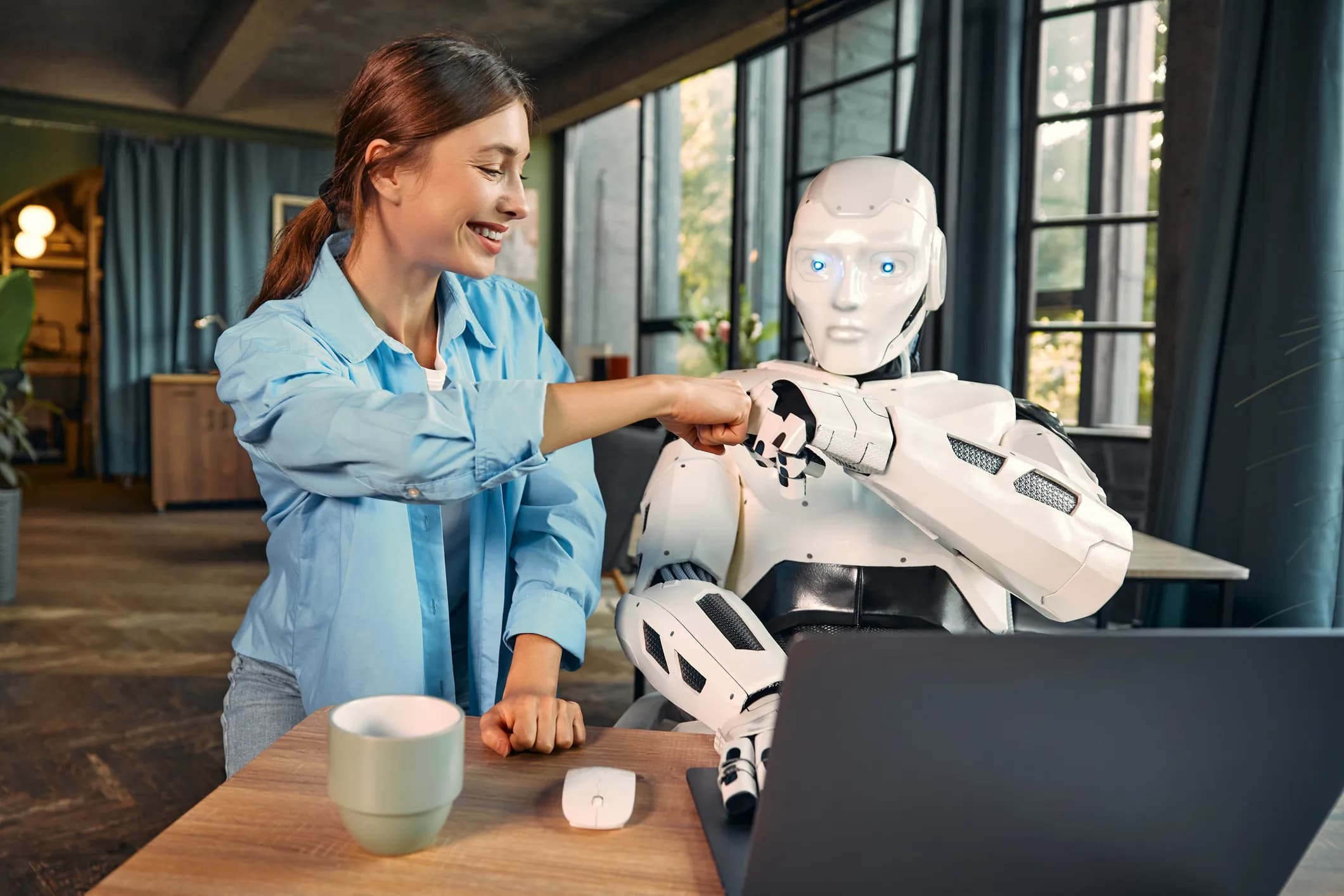
Artificial Intelligence is no longer a concept limited to science fiction movies or advanced research laboratories.
It has become part of everyday life.
People interact with AI when searching online, receiving content recommendations, using navigation systems, communicating with digital assistants, or creating content with generative AI tools.
Businesses are also rapidly exploring artificial intelligence to improve productivity, automate repetitive tasks, analyze information, and create new products.
The growth of AI represents one of the most significant technological transformations of the modern era.
But artificial intelligence is more than just a technology trend.
It has the potential to reshape industries, redefine jobs, transform education, and change how humans interact with machines.
The most important question is no longer:
"Will artificial intelligence affect our lives?"
It already is.
The real question is:
"How can humanity use artificial intelligence responsibly and effectively?"
What Is Artificial Intelligence?
Artificial Intelligence, commonly known as AI, refers broadly to computer systems designed to perform tasks that traditionally require aspects of human intelligence.
These tasks may include:
Understanding language Recognizing patterns Analyzing information Generating content Making predictions Solving complex problems
AI systems are designed differently depending on their purpose.
Some AI systems specialize in narrow tasks.
For example, a recommendation system may suggest content based on user preferences.
Other advanced AI systems can perform a wider range of tasks, including writing, analysis, coding, and conversation.
Artificial intelligence is therefore not one single technology.
It is a broad field that includes different methods and systems.
The Evolution of Artificial Intelligence
The idea of intelligent machines has existed for decades.
However, recent developments in computing power, data availability, and machine learning have accelerated AI development.
Earlier computer systems primarily followed specific instructions.
Modern AI systems can identify patterns from large amounts of data and generate responses based on learned relationships.
This development has made AI more useful across different industries.
The growth of cloud computing has also made advanced AI capabilities more accessible.
Today, individuals and small businesses can access tools that previously required significant technological infrastructure.
Generative AI and a New Digital Era
One of the most visible developments in artificial intelligence is Generative AI.
Generative AI refers to systems capable of creating new content.
Depending on the system, AI can assist with generating:
Text Images Audio Video Software code Digital designs
This has created new possibilities for creators and businesses.
A designer can explore concepts faster.
A writer can organize ideas.
A developer can receive assistance with code.
A business can automate parts of its communication workflow.
Generative AI is changing the relationship between humans and software.
Instead of only clicking buttons and navigating menus, people can increasingly communicate their intentions through natural language.
AI Is Transforming Businesses
Businesses across industries are exploring how AI can improve operations.
AI can support organizations in areas such as:
Customer service Marketing Data analysis Software development Operations Research
For example, AI-powered systems can help analyze large volumes of information much faster than traditional manual processes.
However, AI adoption is not simply about replacing human workers.
The most effective use of AI may involve combining human expertise with technological capabilities.
Humans provide context.
Humans understand goals.
Humans make strategic decisions.
AI can assist with processing information and performing specific tasks.
Artificial Intelligence and the Future of Work
One of the biggest discussions surrounding AI is its potential impact on employment.
Whenever major technologies emerge, the nature of work changes.
The industrial revolution transformed manufacturing.
Computers transformed offices.
The internet created entirely new professions.
Artificial intelligence may create another major transformation.
Some repetitive tasks may increasingly be automated.
At the same time, new roles and industries may emerge.
The future workforce may require new skills.
These could include:
Critical thinking Creativity Communication AI literacy Strategic decision-making
The future may not simply involve humans competing with AI.
Instead, many professionals may increasingly work with AI.
The ability to use intelligent tools effectively could become an important professional skill.
Will Artificial Intelligence Replace Human Jobs?
This question does not have a simple answer.
AI can automate certain tasks.
But most jobs involve multiple responsibilities.
For example, a professional role may require:
Communication Decision-making Creativity Relationship building
Technology may automate some parts of a job while changing others.
History demonstrates that technological change can eliminate certain types of work while creating entirely new opportunities.
The challenge will be adaptation.
Workers may need to develop new skills.
Educational systems may need to evolve.
Businesses may need to rethink how teams operate.
The impact of AI will likely depend on the industry, profession, and speed of technological adoption.
AI in Healthcare
Artificial intelligence has potential applications in healthcare and scientific research.
AI systems can help researchers analyze large amounts of information and identify patterns.
Potential applications include:
Medical research Data analysis Administrative support Diagnostic assistance
However, healthcare is a sensitive field.
AI systems should not automatically replace professional expertise.
Human oversight remains essential.
The potential of AI in healthcare may be greatest when technology supports professionals rather than operating without appropriate accountability.
AI in Education
Education is another area being transformed by artificial intelligence.
AI-powered tools can potentially provide more personalized learning experiences.
Students can use AI to:
Explore complex subjects Practice concepts Receive explanations Organize information
Teachers may also use technology to support educational activities.
However, education is more than information delivery.
Teachers provide mentorship.
Students develop social skills through interaction.
Critical thinking remains essential.
The future of education may combine human teaching with intelligent technological tools.
AI and Creativity
There is an ongoing debate about artificial intelligence and creativity.
Can machines be creative?
AI can generate images, music, text, and designs.
But human creativity involves more than generating output.
Humans bring:
Personal experiences Emotion Cultural understanding Intent Meaning
AI can become a powerful creative tool.
A filmmaker may use AI to visualize ideas.
A writer may use it for brainstorming.
A designer may explore different concepts.
The future may involve new forms of collaboration between human creativity and artificial intelligence.
Artificial Intelligence Is Changing Software Development
AI is increasingly being integrated into software development.
Developers can use AI-powered tools to assist with:
Writing code Debugging Documentation Testing Research
This does not mean programming knowledge will become unnecessary.
Understanding software systems remains important.
However, AI may change how developers work.
The focus could shift toward:
Problem-solving System design Product thinking
AI can assist with implementation, while humans continue making important technical and strategic decisions.
AI and Small Businesses
Artificial intelligence is not only for large technology companies.
Small businesses can increasingly access AI-powered tools.
AI can help with:
Customer communication Content creation Marketing Data analysis Administrative tasks
This accessibility can reduce barriers for entrepreneurs.
A small team may be able to perform work that previously required larger departments.
However, businesses should adopt AI strategically.
The question should not be:
"How can we use AI because everyone else is using it?"
Instead, businesses should ask:
"What real problem can AI help us solve?"
The Importance of AI Ethics
Artificial intelligence creates powerful opportunities.
But powerful technologies also create responsibility.
Important questions include:
How is data collected? Can AI systems produce biased results? Who is responsible for AI decisions? How should privacy be protected? How transparent should AI systems be?
These questions fall under the broader discussion of AI ethics.
Technology should not develop independently from social responsibility.
As AI becomes more powerful, discussions about fairness, accountability, and transparency will become increasingly important.
Privacy in the Age of AI
AI systems often depend on data.
This creates concerns about privacy.
People increasingly share information through digital platforms.
Organizations must therefore think carefully about:
Data protection User consent Responsible data collection Security
Trust will become an important competitive advantage.
People are more likely to use technology when they understand how their information is managed.
The future of AI should involve innovation without ignoring individual privacy.
AI and Misinformation
Generative AI also creates challenges related to misinformation.
Technology can make it easier to create realistic digital content.
This increases the importance of verification.
Individuals may need stronger digital literacy skills.
Before trusting information, people should consider:
Where did this information come from? Is the source reliable? Can the claim be verified?
Technology companies, governments, media organizations, and users all have roles to play in developing a healthier information environment.
As AI-generated content becomes more common, critical thinking will become even more valuable.
Human Intelligence Still Matters
Despite rapid advancements, artificial intelligence does not eliminate the importance of human intelligence.
Humans provide things that technology does not automatically possess in the same way.
These include:
Judgment Empathy Ethical responsibility Contextual understanding Purpose
AI systems can process information.
But humans decide what information matters.
Technology can generate options.
But humans make decisions about which direction to take.
The future should therefore focus not only on artificial intelligence but also on augmented human intelligence—using technology to improve human capabilities.
The Rise of AI-Powered Companies
A new generation of companies is being built around artificial intelligence.
AI is becoming part of products, services, and internal operations.
Companies are exploring AI-powered solutions in areas such as:
Finance Education Media Healthcare Customer service
This is creating new entrepreneurial opportunities.
Founders are identifying problems that can be addressed through intelligent systems.
However, building an AI-powered company requires more than adding AI to a product description.
The technology must create genuine value.
The strongest companies will focus on solving real problems.
How Individuals Can Prepare for an AI Future
The growth of AI does not mean everyone needs to become an AI engineer.
However, understanding the technology can be valuable.
Individuals can prepare by developing:
AI Literacy
Understanding what AI can and cannot do.
Critical Thinking
Evaluating information rather than blindly trusting technology.
Creativity
Developing original ideas and perspectives.
Communication
Working effectively with people and technology.
Adaptability
Continuously learning as industries change.
The future workforce may value people who can combine domain expertise with technological understanding.
The Future of Artificial Intelligence
Artificial intelligence will continue to evolve.
Future developments may lead to more capable systems that can assist with increasingly complex tasks.
AI may become integrated into everyday software.
Instead of being a separate tool, intelligent capabilities could become part of:
Search engines Operating systems Business software Educational platforms Creative applications
The biggest transformation may not be one single AI product.
It may be the gradual integration of intelligence into almost every digital experience.
AI Will Change Industries, but Humans Will Shape Its Direction
Artificial intelligence has enormous potential.
It can improve productivity.
It can support scientific research.
It can help businesses operate more efficiently.
But technology does not decide its own purpose.
Humans do.
The decisions made today about AI development, regulation, education, and ethics will influence its long-term impact.
The future should not be about choosing between humans and machines.
It should be about understanding how intelligent technologies can support human progress.
Conclusion
Artificial intelligence represents one of the most important technological developments of our time.
It is transforming how businesses operate, how people work, and how digital products are created.
The opportunities are significant.
But so are the responsibilities.
AI should not be viewed simply as a replacement for human capability.
It can be viewed as a tool capable of extending human potential.
The individuals and organizations that succeed in the AI era may not be those who blindly adopt every new technology.
They may be the ones who understand how to combine:
Technology + Human Creativity + Responsibility
The future of AI is still being written.
And humanity has an important role in deciding what that future looks like.
Artificial intelligence may change how we work, create, and communicate—but human judgment, creativity, and responsibility will continue to determine how technology shapes the world.
Community
Comments
Sign in to join the conversation.
Sign inContinue reading
More from Technology

India’s AI Workforce Is Entering a New Era: Productivity Rises as Talent Gaps Grow
India’s AI transformation is reshaping the technology workforce as companies use AI to boost productivity while demand for advanced skills in AI, cloud, cybersecurity and data continues to outpace available talent.