Personal Finance for Young Professionals: Where Should You Start?
Learn the essentials of personal finance for young professionals, including budgeting, saving, emergency funds, debt management, investing, insurance, and long-term financial planning.
Written by
Anifoards Insights
Published
August 29, 2026

Receiving your first salary is an exciting milestone.
For many young professionals, it represents independence, freedom, and the beginning of a new chapter in life. After years of education and preparation, earning your own income creates opportunities to make personal decisions and build the lifestyle you want.
But with financial independence also comes financial responsibility.
Rent, transportation, food, subscriptions, loans, family responsibilities, savings, and future goals can quickly make managing money feel complicated.
Many young professionals make one common mistake: they focus entirely on increasing their income without learning how to manage the income they already have.
The truth is that personal finance is not only about how much money you earn.
It is about what you do with the money you earn.
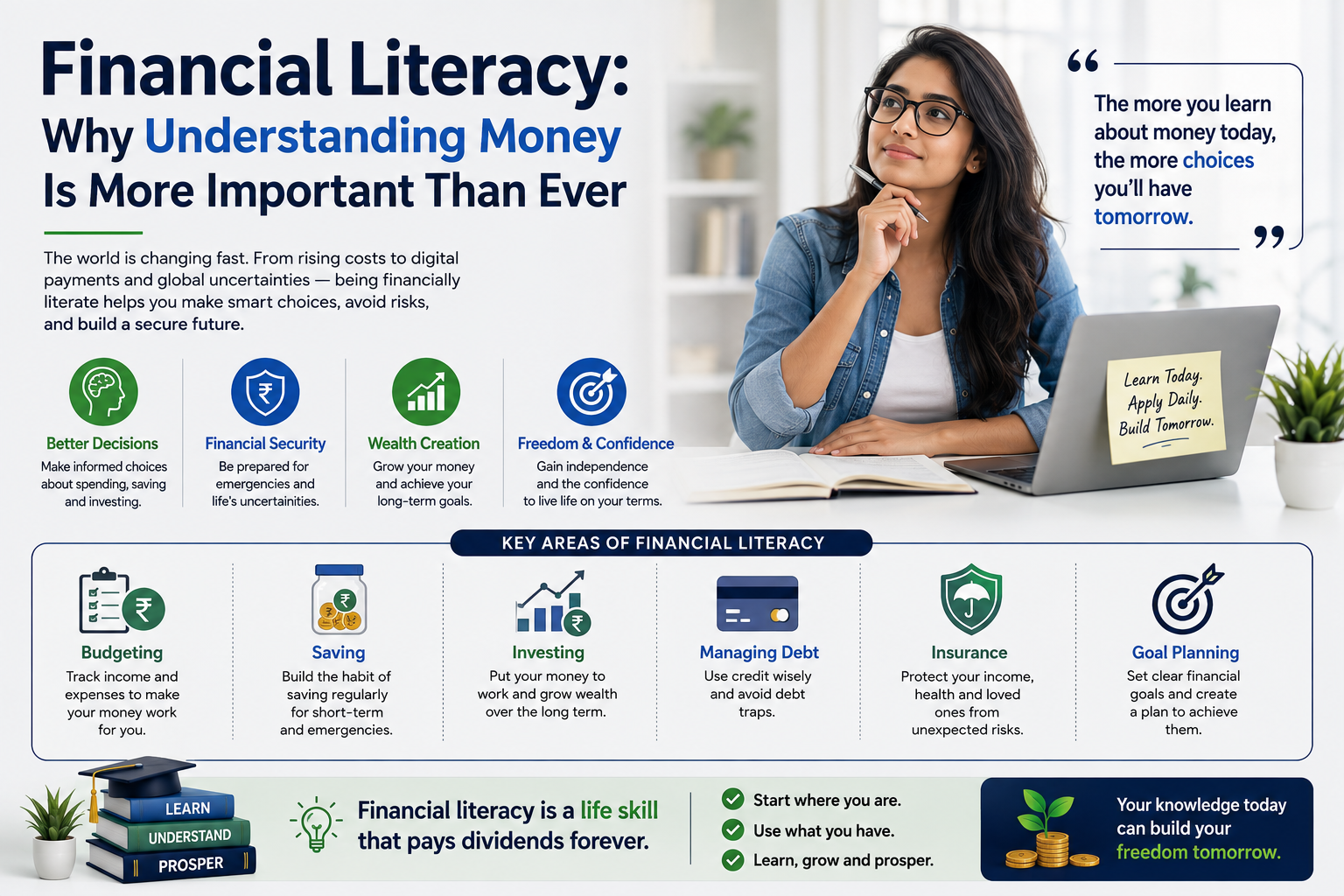
Building good financial habits early can create a strong foundation for the future. The earlier someone understands budgeting, saving, investing, and financial planning, the more prepared they may be for life's opportunities and challenges.
So, where should a young professional begin?
The answer starts with understanding your financial position.
Understand Your Income and Expenses
The first step in personal finance is knowing exactly how much money comes in and how much goes out.
This may sound simple, but many people do not have a clear picture of their monthly spending.
Start by understanding your net income—the money you actually receive after applicable deductions.
Then identify your regular expenses.
These may include:
Rent Food Transportation Utility bills Mobile and internet expenses Insurance Loan repayments Subscriptions Personal expenses
Once you understand your income and expenses, you can begin making better financial decisions.
Without this awareness, managing money becomes guesswork.
A simple question can be extremely useful:
At the end of every month, do you know exactly where your money went?
If the answer is no, expense tracking may be the best place to start.
Create a Realistic Monthly Budget
Budgeting is often misunderstood.
Some people believe a budget means eliminating everything enjoyable from life.
That is not the purpose.
A budget is simply a plan.
It helps you decide where your money should go before it disappears through unnecessary spending.
A basic budget can divide income into categories such as:
Essential expenses Savings Investments Personal spending Entertainment Financial obligations
There is no universal budget that works for everyone.
Someone living with family will have different expenses from someone paying rent independently.
The goal is not to copy another person's financial plan.
The goal is to create one that fits your situation.
A good budget should be realistic enough to follow consistently.
Start Saving Before You Think About Spending Everything
One of the strongest financial habits a young professional can develop is saving consistently.
The amount may initially be small.
That is perfectly acceptable.
The habit matters.
Many people wait until their income increases before they begin saving.
But as income increases, lifestyle expenses often increase as well.
This is sometimes referred to as lifestyle inflation.
A person may receive a salary increase but immediately upgrade their lifestyle.
New subscriptions, expensive purchases, and higher monthly expenses can consume the additional income.
Saving a portion of income from the beginning can create discipline.
Instead of thinking:
"I will save whatever is left at the end of the month."
Consider thinking:
"I will decide how much to save before I begin spending."
This simple shift can make financial planning more intentional.
Build an Emergency Fund
Life is unpredictable.
Unexpected expenses can arise because of:
Job changes Urgent travel Family responsibilities Repairs Other emergencies
Without financial preparation, people may be forced to borrow money during difficult situations.
An emergency fund is money set aside specifically for unexpected circumstances.
The purpose is not to generate excitement or provide luxury.
It provides security.
Building an emergency fund takes time.
You do not need to create it overnight.
Start gradually and build consistency.
The important principle is to create a financial cushion that can provide flexibility when unexpected situations occur.
Understand the Difference Between Wants and Needs
One of the most important personal finance skills is understanding the difference between needs and wants.
Needs may include essential expenses required for daily life.
Wants include things that improve comfort, entertainment, or lifestyle but are not immediately necessary.
This distinction does not mean people should never spend money on things they enjoy.
Personal finance should not feel like punishment.
The goal is awareness.
Before making a significant purchase, ask:
Do I really need this? Can I afford it comfortably? Will this purchase affect my financial goals? Am I buying this because I need it or because of temporary pressure?
Modern marketing and social media can encourage impulsive spending.
Financial awareness creates a pause between wanting something and purchasing it.
That pause can lead to better decisions.
Be Careful With Debt
Young professionals often receive easy access to credit.
Credit cards, personal loans, and instant financing options can make purchases feel more affordable.
However, borrowed money is not free money.
Before taking on debt, it is important to understand:
Interest rates Repayment periods Monthly obligations Late payment consequences Total repayment costs
Debt can be useful when used responsibly.
For example, financing education or purchasing a productive asset may be different from borrowing money repeatedly for unnecessary consumption.
The problem begins when monthly repayments consume a large portion of income.
A useful habit is to avoid taking financial obligations simply because they are available.
Ask whether the debt is necessary and whether repayment remains manageable even if circumstances change.
Learn the Basics of Investing
After developing a basic financial foundation, many young professionals begin exploring investing.
Investing is an important topic, but it should not be approached purely because of trends or social media recommendations.
Before investing, understand the basics.
Ask yourself:
What is my financial goal? How long can I keep this money invested? What level of risk am I comfortable with? Do I understand the investment? Do I have emergency savings?
Different investments involve different levels of risk.
There is no single investment suitable for everyone.
Financial decisions should consider individual circumstances, goals, responsibilities, and risk tolerance.
The goal should be education before action.
Understanding something is generally more valuable than following hype.
Time Can Be Your Greatest Financial Advantage
One of the biggest advantages young professionals have is time.
Financial decisions made early can have a long-term impact.
Developing good habits at the beginning of a career provides more time to:
Save consistently Learn about investing Recover from mistakes Build financial discipline Plan long-term goals
You do not need to become financially perfect immediately.
Personal finance is a long journey.
Starting with small, consistent actions can be more valuable than waiting for the "perfect time."
Set Clear Financial Goals
Money becomes easier to manage when it has a purpose.
Without goals, saving may feel difficult.
Financial goals can be divided into different time periods.
Short-Term Goals
These may include:
Building an emergency fund Purchasing something important Paying off a small debt Taking a planned trip Medium-Term Goals
These may include:
Higher education Starting a business Purchasing a vehicle Moving to a new city Long-Term Goals
These may include:
Financial independence Buying a home Retirement planning Building long-term wealth
Goals help you connect today's financial decisions with tomorrow's possibilities.
Do Not Compare Your Financial Journey With Others
Social media has made financial comparison easier than ever.
You may see people traveling frequently, buying expensive products, driving new vehicles, or appearing to live luxurious lifestyles.
However, appearances do not reveal financial reality.
A person's lifestyle does not tell you:
How much they earn How much they owe How much they save What responsibilities they have
Comparing your financial journey with others can lead to unnecessary spending.
Personal finance is personal.
Your goals, income, responsibilities, and priorities are different.
The most important comparison is not with someone else.
It is with your own progress.
Protect Yourself With Financial Planning
Financial planning is not only about earning and investing.
Protection is also important.
Unexpected events can create financial difficulties.
Depending on individual circumstances, people may need to understand areas such as:
Insurance Emergency savings Financial documentation Family responsibilities
Young professionals sometimes ignore financial protection because they are focused entirely on the future.
However, a strong financial foundation considers both opportunities and risks.
Building wealth is important.
Protecting financial stability is equally important.
Continue Learning About Money
Financial literacy is not something completed after reading one article or watching a few videos.
Financial markets change.
New financial products emerge.
Personal circumstances evolve.
Continuous learning is important.
Young professionals can gradually learn about:
Budgeting Tax basics Investing Insurance Retirement planning Business finance
The goal is not to become an expert overnight.
Start with fundamentals.
Ask questions.
Understand before making decisions.
Avoid Lifestyle Inflation
One of the biggest financial challenges after receiving a higher income is increasing expenses.
A salary increase can create a temptation to immediately upgrade everything.
A more expensive phone.
A more expensive car.
More subscriptions.
More frequent dining.
Better accommodation.
There is nothing inherently wrong with improving your lifestyle.
The problem occurs when expenses increase faster than financial security.
Instead of spending every increase in income, consider dividing it.
A portion can improve your lifestyle.
Another portion can support savings or long-term goals.
This creates balance between enjoying the present and preparing for the future.
Build Multiple Skills, Not Just Multiple Expenses
Early in a career, one of the best investments may be investing in yourself.
Professional skills can potentially create future opportunities.
Consider developing knowledge in areas relevant to your career or interests.
This may include:
Technology Communication Leadership Business Marketing Design Data analysis
Increasing earning potential can become an important part of long-term financial planning.
Personal finance is not only about reducing expenses.
It can also involve improving your ability to create income.
Automate Good Financial Habits
Technology can help create consistency.
Instead of relying entirely on memory and motivation, young professionals can create systems for financial discipline.
For example, some people organize their finances so that savings are separated soon after receiving income.
Automation can reduce the temptation to spend money that was intended for important goals.
The principle is simple:
Make good financial decisions easier to repeat.
Consistency often matters more than occasional bursts of motivation.
A Simple Personal Finance Framework
For young professionals beginning their financial journey, the process can feel overwhelming.
A simple framework can help.
Step 1: Understand Your Income
Know how much money you actually receive.
Step 2: Track Your Expenses
Identify where your money goes.
Step 3: Create a Budget
Give your income a clear purpose.
Step 4: Build Emergency Savings
Prepare gradually for unexpected situations.
Step 5: Manage Debt Carefully
Understand borrowing before taking obligations.
Step 6: Define Financial Goals
Connect money with your future plans.
Step 7: Learn About Investing
Understand risks before making decisions.
Step 8: Continue Improving
Personal finance evolves as life changes.
Financial Success Is a Long-Term Journey
There is no single moment when someone suddenly becomes financially successful.
Financial stability is usually built through repeated decisions.
Saving consistently.
Avoiding unnecessary debt.
Learning new skills.
Making informed choices.
Planning for the future.
These actions may appear small individually.
But over time, they can create significant change.
The goal should not be to become wealthy overnight.
The goal should be to create a healthier and more confident relationship with money.
Conclusion
For young professionals, personal finance can initially feel complicated.
There are many financial products, investment options, and opinions about what people should do with their money.
But the foundation remains simple.
Understand your income.
Control unnecessary expenses.
Save consistently.
Prepare for emergencies.
Avoid irresponsible debt.
Set meaningful goals.
Continue learning.
You do not need to have everything figured out immediately.
The most important step is simply to begin.
Financial habits developed early can influence opportunities for years to come.
Your first salary is not just the beginning of earning money—it is the beginning of learning how to build a financial future.
Community
Comments
Sign in to join the conversation.
Sign inContinue reading